Have you ever bought an apparent “solid gold jewelry Aruba”, worn it for a few months, and watched it slowly turn a strange color, or even reveal a silver-ish metal underneath? If this has happened to you, you’re not imagining it, and you didn’t do anything wrong. Well, the fact is that the word “gold” is used somewhat loosely in jewellery shops, and most people are not educated about the actual difference.
Here is the good news. If you can grasp three terms, solid gold, gold-filled, and gold-plated, then the confusion in the jewelry store will never again be a problem. You will know what you are getting and what you will get years into the future. Let’s break it down together.
Solid Gold
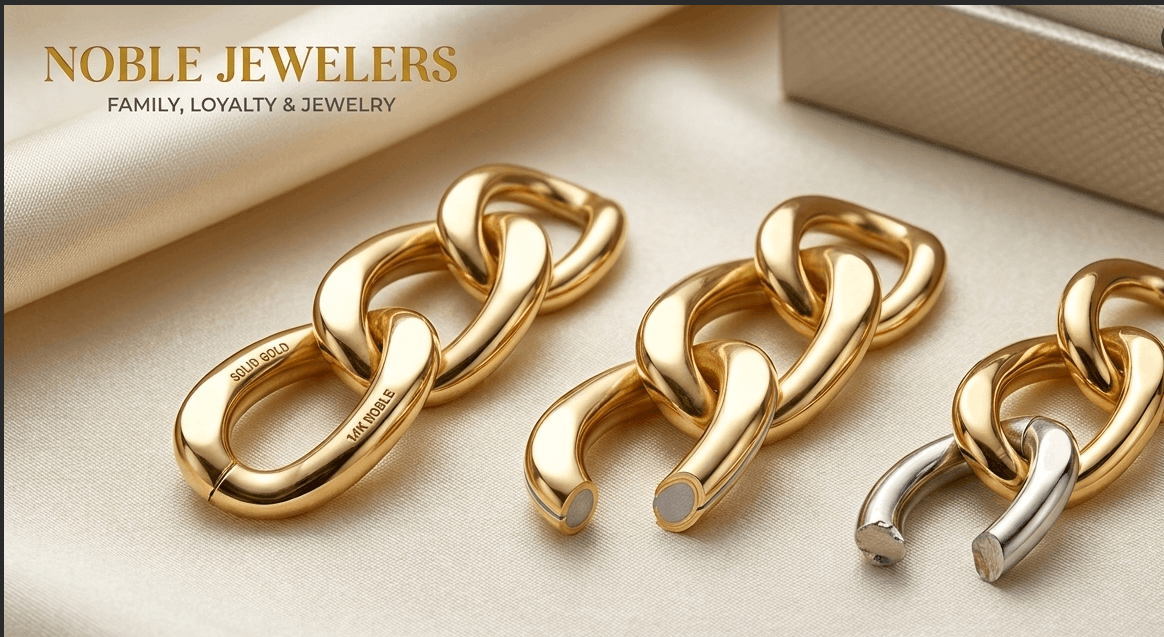
Solid gold is the gold standard of jewelry, with perfect gold layer thickness in each piece. When you buy a piece made of this metal, you are buying pure luxury from the inside out. There are no cheap metals hidden under the surface.
- What it is: All-solid-gold jewelry is made from 100% solid gold. The piece is all gold and will never tarnish, rust, or fade.
- Why it is worth it: Solid gold is durable and has great investment potential as it may increase in value over time. It is oxidation-resistant and is the safest option for sensitive skin. It is the best for wedding rings and heirloom jewellery.
- The Purity Secret: Real gold is graded in karats (e.g., 10K, 14K, 18K, or 24K), representing the purity. The 24K karat marking is a gold standard. The 14K gold signifies that the ring is 58.3% pure gold and 41.7% hard alloys, which ensures that it is scratch-resistant and durable.
Gold-Filled
Gold-filled is a premium, budget-friendly alternative to solid gold. It uses a completely different manufacturing process than simple plating to give you a great look for less money.
- How it is built: A gold-filled piece is like a high-quality sandwich. It features a thick mechanical layer of gold pressure-bonded to a core metal. Under the law, any gold-filled product must have at least 5% (or $1/20$) of the product’s total weight comprised of real gold. This is a real gold layer that is fused together with heat and pressure over a base metal core that is often brass.
- How it wears: Gold-filled items are very durable, won’t flake away, and can last for many years. It is also hypoallergenic.
- Best use case: It works perfectly for fashion items that are worn daily, that look beautiful but don’t have to break the bank for luxury.
Gold-Plated
Gold-plated items are the least expensive method to get a gold look to your product, though you are actually paying for the base metal and a surface coating.
- How it is constructed: A thin layer of gold is electroplated over the base metal, copper, nickel, or brass. This layer is very thin, sometimes less than 0.05% of the product’s weight.
- The Dip Process: Instead of using mechanical pressure, the thin layer is electrically or chemically deposited onto the metal through an electroplating process.
- The Reality: Gold plating is very susceptible to tarnishing, scratching, fading, and wearing off completely within several months or a year. When it is worn down, the low-cost base metal beneath will touch your skin and may result in skin irritation or green skin.
- Best use case: It works best if you’re looking for trendy jewelry or fast fashion that you won’t be wearing every day or keeping in your collection for years.
Quick Comparison: What Are You Buying?
| Metal Type | Total Gold Amount | What is Inside? | Tarnish Risk? | Lifespan |
| Solid Gold | 100% Gold Alloy | Pure Gold Throughout | Zero Risk | Forever |
| Gold-Filled | 5% Gold Minimum | Brass Core | Very Low | Decades |
| Gold-Plated | Less than 0.05% | Copper, Brass, or Nickel | High Risk | Months to 1 Year |
Knowing these differences is not just about tarnish resistance or being fancy. It is about spending your money with confidence. A piece of solid gold jewelry is something you can wear in the ocean, in the shower, and for the rest of your life without a second thought. A gold-plated piece simply cannot promise you that, no matter how shiny it looks on day one.
Final Thoughts
Reading about gold is one thing. Holding a piece of true, honest gold jewelry in your hands is something else entirely. Before you buy your next piece of solid gold jewelry in Aruba, take a moment to ask what is really inside it. A little bit of knowledge goes a long way. It is the difference between jewelry you wear once and jewelry you pass down.
At Noble Jewelers Aruba, we take great pride in sharing the true craftsmanship, honest details, and artistry behind every design we offer. We invite you to come explore our collection of solid gold jewelry, ask us to show you the markings on any piece, and feel the difference for yourself.
Visit us now and find the piece that speaks to your journey today.
Frequently Asked Questions
What is the main difference between gold-filled and gold-plated?
Gold-filled is much thicker than gold-plated, as there is a bonding layer of gold that is applied over the base metal, and gold-plated is, as the name implies, just a very thin film that is applied through electroplating.
Is gold ever tarnished?
No. One of the key advantages of solid gold is its true resistance to tarnish, as it is gold through and through.
What is the lifespan of gold-plated jewelry?
Gold-plated articles do tend to lose their color or become thin with regular usage.
What is the meaning of the karat marking on the jewellery?
It will indicate the purity level of the gold. The higher the number (18K or 24K), the purer the gold.
Should you invest in gold-plated jewelry?
For style and longevity, it’s a great compromise, but if value is the concern, solid gold is the best option.