Looking to purchase a stunning diamond tennis bracelet in Aruba? Or perhaps you already have one, and you want to ensure it remains secure on your arm. Imagine walking along the beautiful beaches of Aruba. You can feel the warm breeze, see the clear blue sea, and relish the sun. But then, you catch sight of your wrist. One of your favorite shiny bracelets is missing. It dropped off due to an open lock.
Now you are panicking about what to do! right?
Purchasing jewelry should be a joy and not a cause for worry. A professional jeweler does not make you feel frightened. A competent jeweller makes you feel secure and at ease. If you go for a tennis bracelet that Aruba tourists and locals love, you should know how it stays on your hand.
Let’s discover what the little things do to perform this big and important task.
Why Do We Call It A “Tennis” Bracelet?
In 1987, a well-known tennis star named Chris Evert was competing in a major tennis tournament at the U.S. Open. During the game, her diamond bracelet flew off because the clasp broke! She said to the officials to stop the game and to let her go and find her precious diamonds on the grass. Since that historic day, everyone refers to these beautiful line bracelets as “tennis bracelets.” Today, modern jewelry makers use the double-locking system so this never happens to you!
The Two Clasps of a Diamond Tennis Bracelet Aruba
To keep your diamonds secure, fine jewelry uses a smart double-lock system. It does not just rely on one lock. Instead, it uses two locks working together. This ensures that even if you accidentally bump your arm or snag your bracelet on a sweater, your jewelry stays exactly where it belongs.
According to the Gemological Institute of America (GIA), checking the locks on your jewelry regularly is the best way to prevent accidental loss. Let’s look at the two parts that make this work.
-
The Main Lock
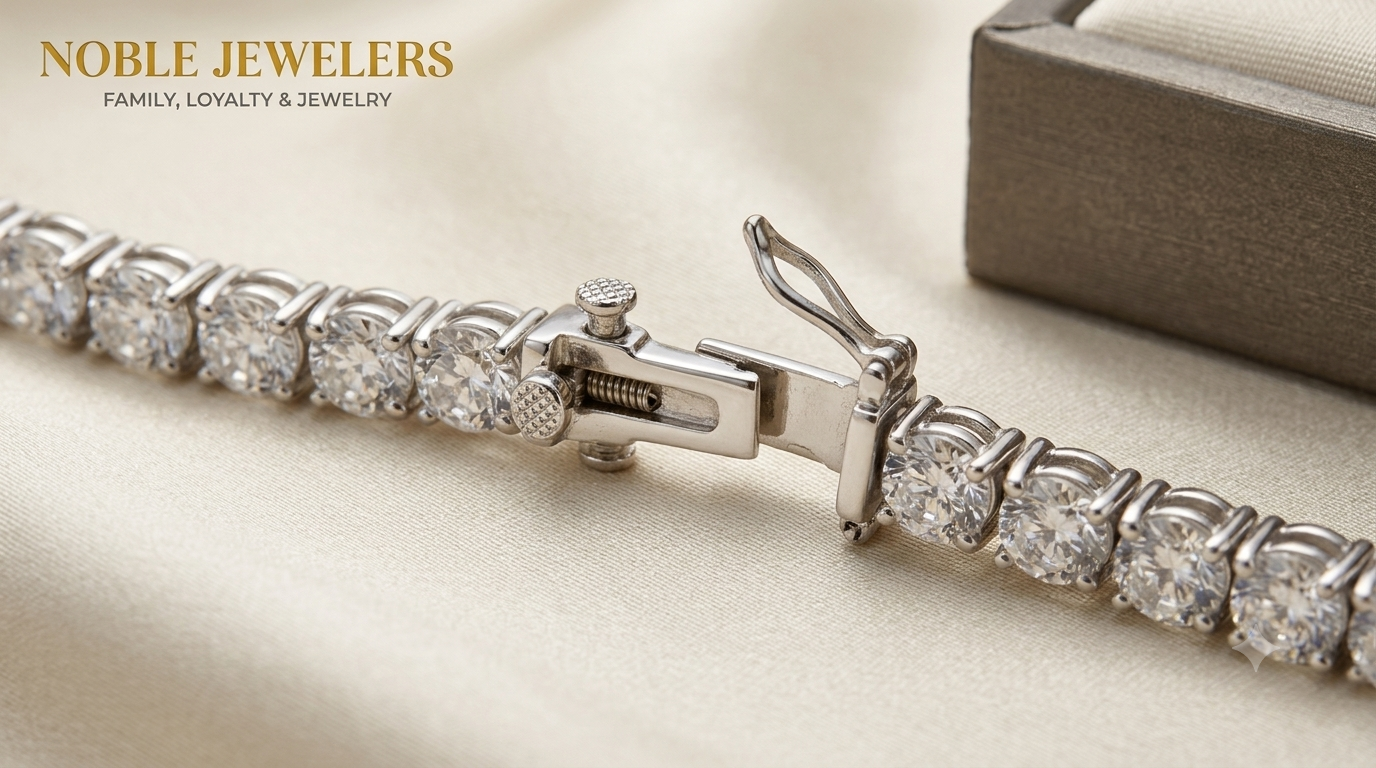
The main lock on most fine tennis bracelets is called a box clasp. This is a very neat and hidden lock. When the bracelet is closed, the lock is tucked away safely under the diamonds so you cannot see it. This keeps the look of the bracelet clean and unbroken.
Here is how the clasp works step-by-step:
The Tongue: One end of your bracelet has a small, flat metal piece that is folded over. This is called the tongue.
The Box: The other end of the bracelet has a tiny, hollow square opening. This is called the box.
The “Click”: You gently push the metal tongue inside the box. As it goes in, the folded metal squeezes and then pops open. You will hear and feel a sharp “click” sound. This click is the sound of safety! It means the tongue is locked tight inside the box.
If you want to see how this looks, you can check our Aruba Custom Jewelry Design guide to see how our local master craftsmen build these parts by hand.
-
The Back-Up Lock
What happens if you pull your arm quickly and the main box lock slips open? This is where the safety feature comes to the rescue. It is a secondary clasp designed to catch the bracelet before it can fall off your hand. This backup lock is usually called a figure-eight lock or a side-arm latch. It is named after its shape, which looks like the number 8.
Once you click the main tongue into the box, you flip this small metal figure-eight wire over a tiny round button on the side of the clasp. It snaps firmly into place. If the main lock ever experiences a sudden lock failure, the figure-eight wire blocks the bracelet from sliding apart. It acts like a seatbelt for your diamonds!
How to Test If Your Bracelet Is Safe
Before you head out for a nice dinner in Oranjestad or take a walk by the cruise port, you should test your bracelet. It only takes five seconds:
- Push the tongue into the box. Do you hear a clear, loud “click”? If yes, the spring inside is working well.
- Gently pull on the two ends without opening the lock. Does it stay shut?
- Close the secondary clasp (the figure-eight safety catch). Does it snap tightly over the little pin?
If any of these parts feel soft, loose, or do not make a sound, it is time for a quick check-up. You can read more in our Jewelry Care in Beach Climbs guide about keeping your metals clean and strong.
How to Fix a Loose Clasp at Home
Over time, gold and platinum can bend slightly. This is normal. If your main lock has a clasp failure, the metal tongue might have become squeezed too flat.
The DIY Quick Fix: You can use a pair of small tweezers. Very gently, press the tweezers inside the fold of the metal tongue and open it up just a tiny bit. This makes the tongue wider so it fits tighter inside the box and clicks again. Please do this very slowly and gently!
When to See a Professional: If the figure-eight latch is loose, or if the tongue feels like it might break, do not force it. Bring it to an expert. A professional jeweler can use special tools to adjust the tension and metal memory safely without scratching your precious gold.
Final Advice
A diamond tennis bracelet Aruba is meant to be worn and enjoyed, not stressed over. Get to know the click of your own clasp, check your safety lock now and then, and trust the little engineering happening quietly around your wrist. A well-made clasp is a small detail that makes a big difference, and it is exactly the kind of quiet craftsmanship we care about.
Come explore Noble Jewelers Aruba diamond tennis bracelet collection in Aruba, and let our team show you the double-lock security up close, no rush, no pressure. We never cut corners on security because we know your jewelry holds your most precious moments.
Visit us, ask every question you have, and feel the confidence of a bracelet built to stay right where it belongs, on your wrist.
[Explore the Collection] [Book an Appointment]
Frequently Asked Questions
Is the diamond tennis bracelet safe in the ocean in Aruba?
It is recommended that it be removed prior to swimming. Cool ocean water can cause fingers and wrists to contract a little, and sunscreen might cause the skin to become slippery, allowing even a locked bracelet to slip off.
How often should I get my bracelet clasp checked?
A professional jeweler should examine your clasp and diamond prongs once a year to ensure that the metal is not weakened or has lost its spring.
What is the safest way to tie a tennis bracelet?
One or two figure-eight safety catches with a hidden box clasp are the safest and most attractive tennis bracelet design.
What makes it a Tennis Bracelet?
It was named in honor of tennis star Chris Evert, who stopped a game in the 1987 US Open when her bracelet fell off her arm.
What is the purpose of having two clasps on a tennis bracelet?
The secondary clasp acts as a backup to the primary clasp; should it start to become weak over a number of years and the bracelet become disconnected, this will break as well.