Have you ever fallen in love with a beautiful pendant, only to feel completely stuck when it was time to pick a chain for it? You are standing there looking at four or five gold chains and pendants that all sort of look the same, and somehow you are expected to just know which one is right. That moment of confusion is more common than you think, and it is not because you don’t know jewelry. It is because nobody ever explained the differences.
The good news is that chains are actually easier to understand than they look. Each style has its own shape, its own strength, and its own personality. Once you know what makes each one different, picking the right one for your pendant becomes simple, even fun. Let’s walk through it together.
Types Of Gold Chains And Pendants Aruba
There are basically four types of chains and pendants that are trending in Aruba. Each one is beautiful, elegant, and classy. The only difference is your choice and the way you style it. So if you are looking to buy one or want to upgrade your existing one, below is a detailed guide for you.
-
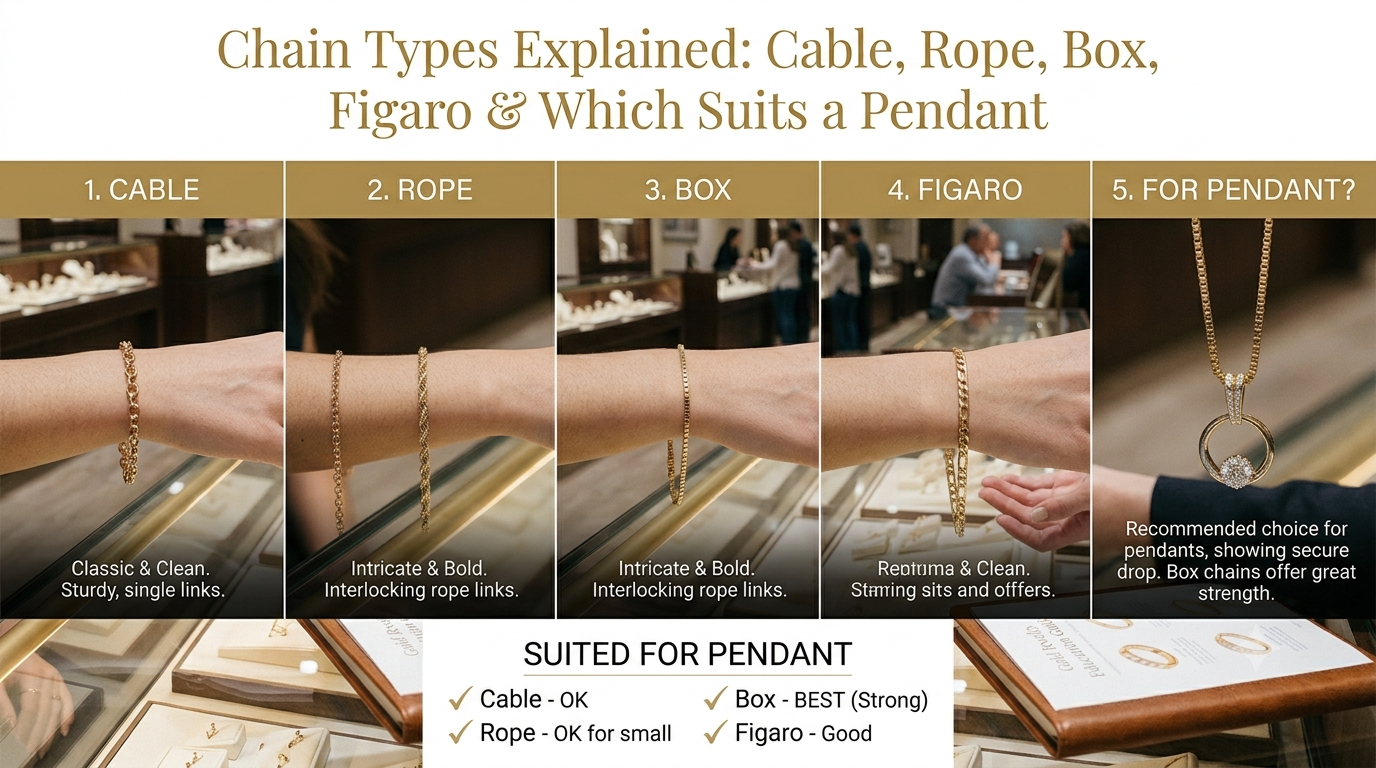
Cable Chain
A cable chain is made of simple, round or oval links, one connected to the next in a smooth, even pattern. Think of it as the quiet, dependable friend of the chain world.
Why it works so well: Because each cable link is uniform and simple, the chain lies flat and natural against your skin, letting a pendant hang exactly where it should, front and center.
Best for: Small or delicate pendants, especially ones with sentimental value, like a birthstone or an initial charm.
-
Rope Chain
A rope chain is made from tiny links twisted tightly together, so it truly looks like a miniature braided rope. It catches the light beautifully from every angle.
Rope chain durability: Because of how tightly the metal is twisted, rope chains are surprisingly strong for their delicate look. They hold up well to daily wear.
A gentle caution: The twisted texture is gorgeous on its own, but it can sometimes cause a pendant to tilt slightly off-center. If you love this style, ask your jeweler to size the bail (the small loop on the pendant) carefully so it sits just right.
-
Box Chain
A box chain is built from small square or rectangular links that interlock tightly, one inside the next, almost like a tiny chain of building blocks.
Ironclad strength: This is the chain to trust with something heavier. The box chain strength with square-link design resists stretching, twisting, and snapping far better than many other styles, which makes it a favorite for pendants with real weight or thick gemstone settings.
Best for: Heavy pendants or anyone who wants a clean, modern line with zero fuss.
-
Figaro Chain
A figaro chain follows a fun rhythm: two or three short links, followed by one longer oval link, repeating down the entire chain. This pattern started in Italy and has stayed popular ever since.
Eccentric pattern: the figaro pattern or repeating rhythm is what gives figaro chains their signature flair. It lies flatter than a cable chain and adds subtle movement without being loud.
A gentle caution: Just like rope chains, the pattern of longer and shorter links can sometimes cause a pendant to shift slightly. Figaro shines best as a bold standalone piece, though it can still hold a well-sized pendant beautifully.
So, Which Chain Should Hold Your Pendant?
Did you get more confused rather than gaining clarity? Here is the simple answer, broken down by what matters most to you
| Your Pendant | Best Chain Choice | Why |
| Small or delicate | Cable or Box | Lies flat, keeps pendant centered |
| Heavy or bold | Box | Strongest resistance to stretching |
| Slide-on charm | Snake (Omega) | Smooth surface, won’t catch or flip |
| Want texture and sparkle | Rope | Beautiful, but size the bail carefully |
| Want a subtle pattern | Figaro | Elegant rhythm, best with lighter pendants |
A Small Detail That Makes a Big Difference
One thing many people overlook is chain gauge thickness, which simply means how thick or thin the chain wire actually is. A thicker gauge chain can support a heavier pendant with confidence, while a thinner gauge is better suited to lightweight charms. When in doubt, it is always worth asking, since the right gauge protects your pendant just as much as the right chain style does.
Let’s Find the Chain Your Pendant Has Been Waiting For
There is no single “best” chain, only the best gold chains and pendants in Aruba and your everyday life. Think about the weight you are working with, the look you love, and let those two things guide you. The right pairing will feel effortless the moment you see it.
At Noble Jewellers, we know that pairing the perfect chain with the perfect pendant can feel like a small puzzle, and we genuinely enjoy helping people solve it. Every piece from our gold chains and pendants is chosen with real link strength, honest gauge thickness, and lasting craftsmanship in mind, not just good looks on a shelf. Bring your pendant in, and we will help you find the chain that lets it shine exactly the way it should.
Pop in to try on different weights, test the natural drape against your skin, or simply chat about custom designs with a cold drink in hand. We are here to help you tell your story, your way.
- See Our Chains & Pendants
- Ask Our Team a Question
Frequently Asked Questions
What is the best chain for a small pendant?
Cable and box chains are both excellent choices, since they lie flat and keep small or delicate pendants centered and secure.
Which chain is strongest for a heavy pendant?
Box chains offer the most box chain strength, thanks to their interlocking square links that resist stretching and snapping.
Can a rope chain hold a pendant?
Yes, though the twisted texture can sometimes cause a pendant to tilt. Sizing the bail carefully helps it sit centered.
What makes a figaro chain different from a cable chain?
A figaro chain follows a repeating pattern of short and long links, giving it a flatter lie and more visual rhythm than a simple cable chain.
Does chain gauge thickness really matter?
Yes. A thicker gauge supports heavier pendants better, while a thinner gauge suits lightweight charms best.