Now picture you are walking arm-in-arm down Eagle Beach with your loved one, holding hands along the soft sand. You want to get the ring or the exquisite necklace to keep this trip forever in memory. But when you look at the jewelry, you’ll see labels such as 10K, 14K, 18K.
It should be fun to shop for jewellery, not like a school test! A good jeweler does not try to push you. The best jeweler will provide you with clear and honest information so that you can make your own decision. If you’re looking at the 14k gold jewelry Aruba has to offer, we want to help you understand how different kinds of gold are made, how they look, and how they last.
Let us break down the secret behind the karats.
What Is a Gold Karat?
Pure gold is a very beautiful metal, but it does have a little secret: it is very soft. However, if it were 100% pure gold, it would bend easily when you hold a grocery bag or wave your hand. It would scratch if it touched a doorknob.
The jewelry makers add other strong metals, such as silver, copper, and zinc, to pure yellow gold to make it strong enough to wear. The final alloy composition is referred to as the recipe of metals.
The word ‘Karat’ (K) is only a way of measuring the proportion of pure gold in that recipe. There are 24 divisions of gold. Therefore, 24K gold is pure gold of 100% and contains no other metals. Other numbers, such as 10K, 14K, or 18K, indicate the number of parts of that pure gold that are added to the piece.
The easiest way to pick the right balance of beauty to strength for your daily use is to understand the purity percentage.
Let us look at each type of gold one by one.
1. 10K Gold
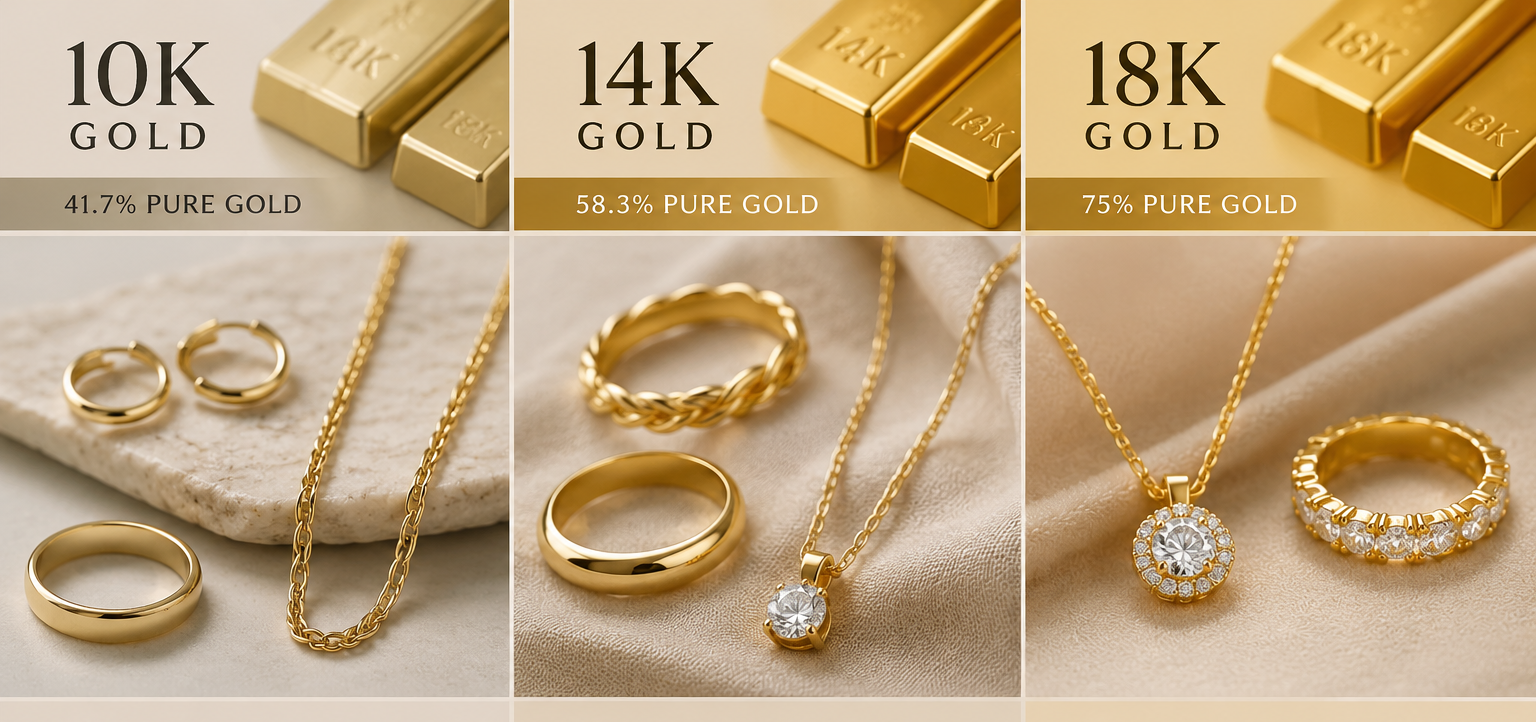
10K gold is made of 10 parts pure gold and 14 parts other strong metals. This means its gold purity percentage is 41.7% pure gold.
So here are the facts about 10K gold:
- Durability: The most durable of all the gold. It has more other hard metals, which makes it more resistant to bends, dents, and scratches than any other karat.
- Color: It is the lightest yellow. This is because the other metals in the mix minimize the deep yellow of the pure gold.
- Budget: It’s the most affordable option as it requires less pure gold.
- Ideal for: Crafty types, athletes, and those who just want to have a stunning yet practical piece of jewelry they don’t have to worry about getting damaged.
Note: For highly sensitive skin, the higher metal percentage may contribute to occasional skin sensitivities.
2. 14K Gold
14K gold is the most popular gold used for fine jewelry in many regions. It is made of 14 parts pure gold and 10 parts other metals. This means it has a purity percentage of 58.5%.
Why is 14K gold so loved? Let’s check its features:
- Balance: It offers the ultimate sweet spot. It is strong enough to wear every day without snapping or scratching easily, yet it still contains a high amount of real gold.
- Color: It has a beautiful, classic, warm gold look. It has a richer yellow tone than 10K gold.
- Price: It is highly valuable but still very reasonable.
- Best for: Beautiful jewelry intended for everyday use, such as necklaces, bracelets, and especially engagement rings in Aruba or wedding bands. It is tough enough for active lifestyles but still looks incredibly luxurious.
3. 18K Gold
18K gold is the choice of world-famous jewelry houses. It is made of 18 parts pure gold and only 6 parts other metals. This means it is 75.0% pure gold.
Here is why 18K gold is so special:
- Color: The gold color shows a huge difference here. The 18K gold is a very rich, deep, and vibrant yellow in color and appears very premium.
- Hypoallergenic: It is highly recommended as hypoallergenic gold due to the amount of pure gold it contains and the fact that there is a very minimal amount of other metals in it. For sensitive skin, which can become irritated by less than 10-karat jewelry, 18K is very soft and safe to wear.
- Softness: Pure gold is soft, so 18K gold is softer than 14K or 10K. A bit more delicate handling to prevent scratches.
- Ideal for: Fine luxury jewelry, special occasions, and high-end engagement ring settings that are meant to highlight precious gemstones with a beautiful shine.
A Quick Comparison Chart of 10K vs 18K vs 14Kgold jewelry Aruba
All kinds of karats has its own level of purity and sparkle. However, to help you see the differences at a single glance, here is a simple guide comparing each option.
| Feature | 10K Gold | 14K Gold | 18K Gold |
| Pure Gold % | 41.7% | 58.5% | 75.0% |
| Karat Durability | Highest | Great Balance | Lower (Softer) |
| Gold Color | Lightest Yellow | Rich Yellow | Deep, Warm Yellow |
| Price Level | Lowest | Moderate | Highest |
How to Pick the Right Gold for Your Lifestyle
Selecting the ideal gold is a very personal decision. To find your match, ask yourself these three simple questions.
How active are you?
For anyone who does any type of hands-on work or loves playing tennis or any kind of outdoor beach sport, the 14K or 10K gold is a magnificent selection, as it will not get scratched by everyday bumping and bruising. The 18K gold is a beautiful and luxurious option, suitable for those who prefer a more relaxed lifestyle or for use in romantic dinners.
What is the texture of your skin?
For those who experience itchy ears and red skin reactions from wearing inexpensive jewelry, trying 18K gold is one of the most secure choices because of its high purity, which makes it hypoallergenic.
Which color of yellow do you prefer?
Some people love a soft, subtle yellow gold color by karat that blends in. Others love the bright, rich yellow that stands out from across the room. We suggest holding different karats under the natural island light to see which one makes you smile.
Hold the Sun’s Warmth in Your Hands
Gold is more than just a metal; it is a warm reminder of your brightest days under the Aruba sun. Whether you are celebrating a beautiful love story in 14k gold jewelry Aruba or looking for a special piece of 18k jewelry to take home, there is a best way to experience gold in a whole new way.
At Noble Jewellers Aruba, we believe you should never feel unsure about what you are buying, down to the very last percentage point. Come sit with us, feel the actual weight of 14K versus 18K gold against your skin, and enjoy our completely relaxed, friendly atmosphere. No rush, no hard-sells, just honest guidance to help you find the perfect karat for your story.
- Compare Gold in Person
- Start Your Ring Journey
Frequently Asked Questions
Does 14K gold make skin go green?
No, it shouldn’t turn your skin green if you wear it with high-quality 14K gold. Cheap copper in base metals typically results in green marks; 14K gold, on the other hand, tends to be stable and safe for nearly all.
Is it OK to wear 14k and 18k gold at the same time?
Yes, you can! But as 18K gold is a little softer than 14K, the 18K ring may scratch a little faster if they rub against each other constantly (such as two stacked rings).
What is the best way to clean gold jewelry in Aruba?
It is easy to clean gold at home with a bowl of warm water and a bit of mild dish soap. Soak for 10 minutes, carefully brush with a baby toothbrush, and rinse with clean water.
What is the most popular karat for an engagement ring?
14K gold is a very popular choice for engagement rings in Aruba, thanks to its strong balance of durability and rich color.