Diamonds hold meaning. People choose them for engagement rings, anniversary gifts, wedding sets, pendants, and other pieces meant to last. Because these stones carry emotional and financial value, many buyers naturally ask: how can you tell if it’s a real diamond? It’s an important question. Real diamonds react to light, heat, touch, and magnification in specific ways that imitations can’t duplicate. Once these differences are understood, identifying a genuine diamond becomes simple and far more confident.
This guide outlines practical, trusted methods used by gemologists and high-end jewelers. It also explores where fake stones show their limits, what everyday tests reveal, and why a professional inspection still matters. For buyers seeking engagement rings, loose diamonds, tennis bracelets, diamond stud earrings, or any luxury piece, understanding authenticity builds confidence from the start.
What Does a Real Diamond Look and Feel Like?
Before diving into testing methods, it helps to understand the natural traits of real diamonds. A genuine diamond forms under extreme pressure. That process produces a hardness level unmatched by any other gemstone. It also gives diamonds a crisp sparkle, a sharp light return, and a metallic-like brilliance that people associate with luxury jewelry.
Synthetics and simulants often attempt to replicate this look, but side by side, they fall short. Created stones may look too perfect. Some appear glass-like. Others show rainbow flashes instead of the clean, sharp reflections that define a real diamond.
Understanding these natural traits sets the stage for diamond authenticity testing, especially when the goal is understanding how can you tell if it’s a real diamond in everyday situations.
The Most Reliable Diamond Tests Used by Jewelers
When people want quick clarity on how to tell if a stone is a real diamond, these tests provide the most accurate picture. High-end jewelers use a combination of visual, physical, and magnification checks. These same methods also help clarify where man-made diamonds align with natural diamonds and where simulants fall short.
-
The Fog Test
Real diamonds disperse heat quickly. When someone breathes on a diamond, the fog disappears almost instantly. Fake diamonds hold the mist for several seconds. It’s a simple comparison, but it reveals a lot about heat conductivity.
-
The Water Test
Diamonds are dense. Suppose a real diamond is dropped in a glass of water; it sinks fast. Many imitations float or sink slowly because they lack the same weight and structure.
-
The Light Test
A real diamond returns light with speed and precision. White light creates brilliance. Colored light creates fire. Both blend into sharp, bright flashes. Fake diamonds often appear dull from certain angles or exhibit rainbow-like reflections that resemble plastic sparkle rather than genuine brilliance.
-
The Scratch and Hardness Test
Only a diamond can scratch another diamond. Jewelers never recommend trying this at home because it risks damaging a finished piece. Still, it remains one of the most evident signs during professional inspection.
-
The UV Light Test
Some real diamonds glow blue under UV light. Not all do, but when they do, it helps distinguish them from certain simulants. Fake stones often show no reaction or glow a different color.
-
The Thermal Conductivity Test
Jewelry stores rely on thermal and electrical conductivity diamond testers. These tools measure how fast heat moves through a stone. Since diamonds conduct heat exceptionally well, the reading effortlessly reveals authenticity.
Identifying Genuine Diamonds Through Magnification
Gemologists use 10x magnification to study a diamond’s internal and external structure. Under the lens, nature leaves unique fingerprints. These include:
- Tiny inclusions
- Mineral traces
- Growth lines
- Slight imperfections
These details confirm a diamond’s origin and authenticity. Many fake stones look too clean or have bubble-like marks that don’t appear in real diamonds.
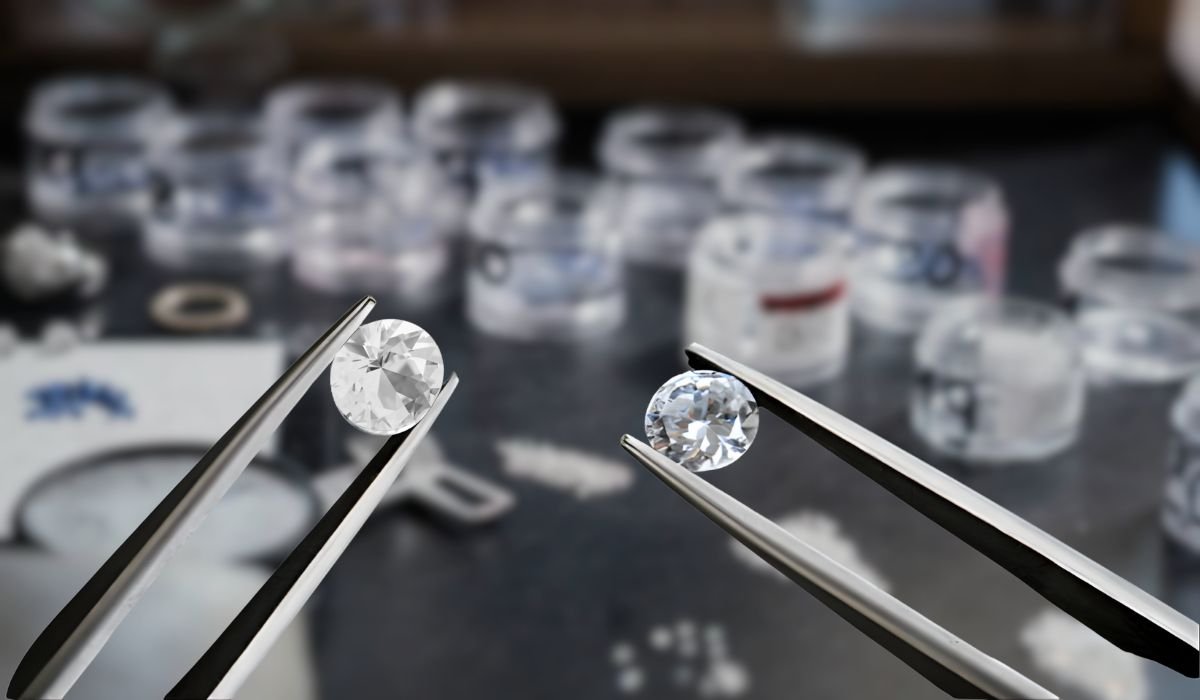
Clarity grading also comes into play. Real diamonds range from Flawless to Included. Most sit somewhere in between. A lab-grown or synthetic diamond can still be real, but it will show different growth patterns, such as metallic inclusions from the manufacturing process. Magnification is one of the most effective ways to distinguish real vs fake diamonds because fake stones rarely exhibit natural formation traits.
Conclusion!
By this point, the core idea is clear. Real diamonds behave differently from imitations. Their sparkle is sharper. Their structure is stronger. Their heat conductivity is unmatched. When someone wants reliable guidance on how can you tell if it’s a real diamond, working with a trusted jeweler matters more than anything else. With the proper tests, magnification, and certification, identifying genuine diamonds becomes much easier. Buyers gain confidence, especially when selecting an engagement ring, tennis bracelet, pendant, or diamond earrings.
This is where Noble Jewelers stands apart. Every piece is curated with care, making their collection one of the most respected Aruba jewelers. Your perfect diamond is waiting. Visit us today and let our team help you choose a stone that reflects your story.