
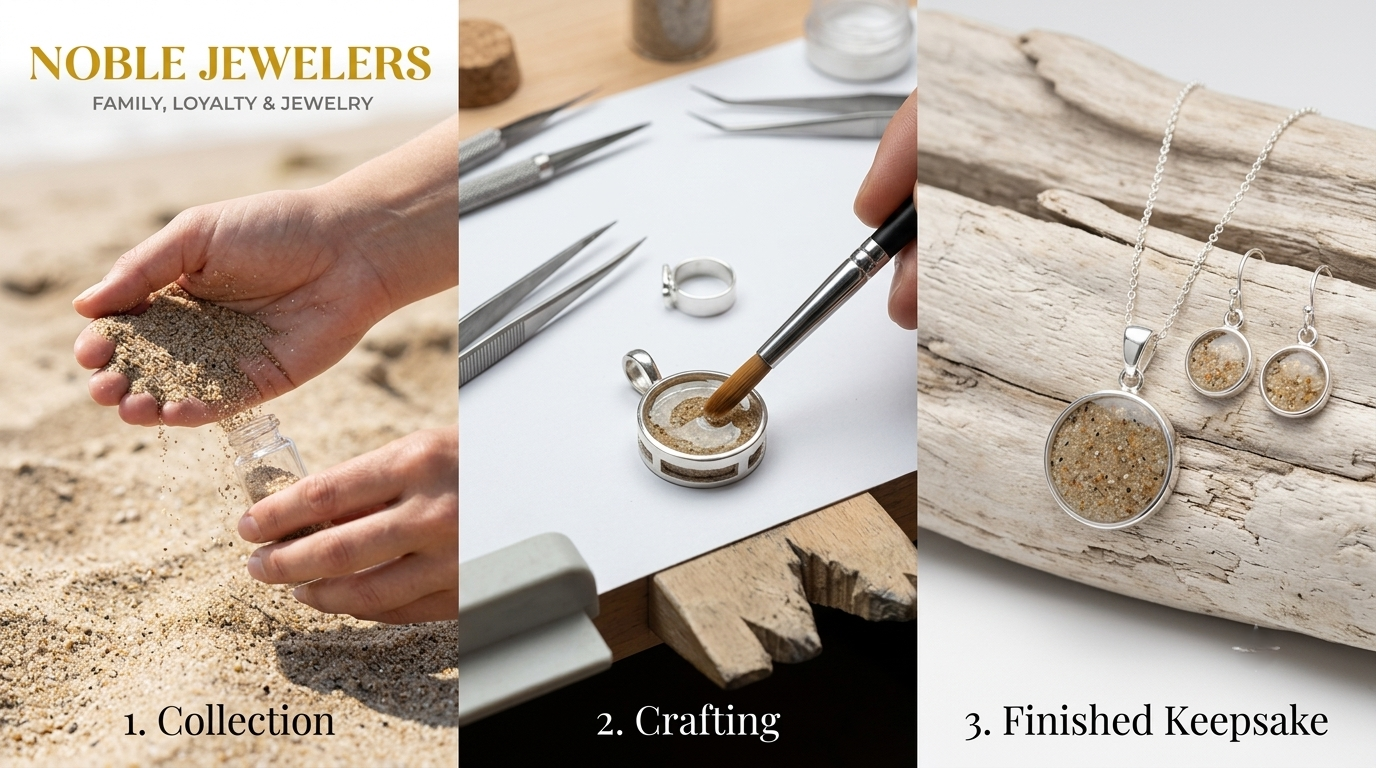
Pick up a handful of sand at the beach, and it slips right through your fingers in seconds. So how does that same loose, shifting sand end up perfectly still, glowing under a smooth, glass-like dome on a bracelet or necklace? It genuinely looks like a small piece of magic, but it is really the result of a careful, patient process done almost entirely by hand.
So how is Dune Jewelry made using just sand, beach, resins, or gems? If these questions make you worry about the longevity of the jewelry and this stops you from exploring this eccentric jewelry piece, this is the right place to be. Let’s find out the answers step by step.
How Is Dune Jewelry Made: Simple Steps
If you have ever visited the sunny shores of Aruba, you may have asked once: how is sand jewelry made? Here is a complete process so you can see exactly how jewelry made from beach sand turns raw nature into a treasure that lasts forever.
Step 1: Collection and Preparation of the Sand
Every piece of sand jewelry starts with a real story. Before any crafting begins, raw sand must be gathered and cleaned with great care.
Sourcing the Sand
Dune Jewelry uses authentic sand collected from more than 5,000 global locations, including popular Aruba spots like Eagle Beach, Palm Beach, and Baby Beach. Travelers can even bring in sand from their own special trips to create a personal order.
Cleaning and Drying
Raw beach sand cannot be put straight into a ring. It contains tiny pieces of ocean salt, organic shell bits, and natural moisture.
- First, the sand is thoroughly washed with clean water to remove salt and dirt.
- Next, it is completely dried using gentle heat.
If sand is left dirty or damp, it could cloud the clear top layer over time. Cleaning ensures the grains stay bright and sharp forever.
Step 2: Hand-Packing using a Patented Technique
Once the sand is washed and dry, skilled artists step in to handle the delicate assembly process.
When people ask how sand is put into jewelry, they often expect big factory machines. But every single piece is actually hand-packed. Because sand grains from different beaches vary in size and texture, human hands and eyes are needed for every step.
- Setting the Frame: The jeweler takes a solid frame (called a bezel) made of .925 sterling silver, gold, or durable stainless steel.
- Hand-Packing: Using a specialized, patented technique, the artisan densely packs the tiny sand grains into the metal bezel by hand.
- Adding Colors: If the piece features ocean colors, real crushed turquoise, lapis, or mother-of-pearl is layered alongside the sand to mimic rolling waves.
According to the Gemological Institute of America (GIA), tight hand-packing inside rigid metal bezels prevents natural inlay materials from shifting during daily wear.
Step 3: Resin Doming and Sealing
The most crucial step in how sand jewelry is made is creating the protective top shield. This is what makes the piece completely waterproof and smooth to the touch.
- Pouring the Resin: A special, water-clear liquid resin is carefully poured over the hand-packed sand.
- Forming the Dome: The jeweler crafts a slightly raised, convex shape, like a soft magnifying lens. This dome shape captures light and slightly magnifies each grain of sand so you can see its unique texture.
- Curing: The resin is cured under controlled warmth and light until it turns as hard as a clear gemstone.
This hard seal locks out water, air, and dust, meaning your sand will never spill, wash away, or fade.
Step 4: Finishing Touches and Quality Inspection
After the resin cures completely, the jewelry piece undergoes final refining. Here are a few last things to do to get a completely alluring jewelry piece.
- Hand Polishing: Artisans buff the resin surface and metal casing with soft cloths and fine polishing compounds until it reaches a glass-like luster.
- Quality Check: Every item is closely inspected to ensure there are no tiny air bubbles or rough edges.
- Authenticity Label: The finished piece is paired with an official card and lifetime warranty that names the exact beach where the sand was collected.
In the Dune Jewelry process, nothing about it is mass-produced or rushed. Real hands clean real sand and pack it carefully into real metal, one piece at a time. That is part of why no two pieces ever look completely identical.
Final Advice
Here are all the answers to the question: how is Dune Jewelry made in Aruba? The best piece of jewelry is not the one with the biggest price tag. It is the one that brings back a happy memory every time you put it on. Look for craftsmanship you can trust and a story that feels close to your heart.
Trust Noble Jewelers in Aruba once and experience a thoughtful, tax-free way to shop. Whether you prefer to stop into our cool boutique after your ship docks, send us a friendly message on WhatsApp to view designs, or schedule a relaxed sit-down appointment. We are excited to help you choose a handcrafted piece of Aruba to carry with you.
Explore the Dune Collection or Schedule Your Store Visit now!
Frequently Asked Questions
Can the sand fall out of Dune Jewelry?
No. The sand is hand-packed into a metal frame and completely sealed under a cured resin dome, making it permanent and water-safe.
Is Dune Jewelry made by hand?
Yes. Every piece is handcrafted by artisans who clean the sand, pack the bezels, and polish the resin by hand.
Where can I buy authentic Dune Jewelry in Aruba?
You can find genuine, tax-free Dune Jewelry at Noble Jewelers in downtown Oranjestad, just minutes from the cruise terminal.
Why does the sand need to be cleaned first?
Raw sand can contain organic matter, debris, and salt, which could cloud the final design if not properly washed and dried beforehand.
What is the dome on top of the jewelry made from?
It is a clear liquid resin that cures into a smooth, slightly raised dome, protecting the sand while magnifying each grain.