Is your engagement coming up, and your partner has asked for a loose diamond on the special day? Is that yes, then we can understand your confusion. It is challenging to choose a loose diamond for an engagement ring due to the variety of cuts and settings. Moreover, some diamond merchants also try to fool you and sell a cheap one at the price of authentic diamonds.
Here’s the thing: once you understand a few simple rules, the whole process becomes clear. Let us walk you through each step by the end, you’ll know precisely how to choose one that fits your budget, your partner’s style, and your long-term goals.
How To Choose A Loose Diamond For An Engagement Ring: Step-by-Step Guide
Your engagement is the biggest day of your life, and you want everything to go perfectly. To get the best results, stay calm, don’t rush, and trust the process. You will definitely get the proper cut and quality that you and your partner can cherish for all your lives.
Here is an engagement ring diamond guide that will help you step by step
Step 1. Understanding the 4Cs
When purchasing loose diamonds, the 4 Cs (cut, color, clarity, and carat) are the primary parameters for evaluating quality. They help you assess a diamond’s overall appearance and value. Let’s discuss each of the 4Cs so you can make an informed decision:
-
Cut
The cut is the most important C when selecting a diamond. It refers to the quality of a diamond’s cut and facets. A diamond with an excellent cut reflects light so that it sparkles brilliantly. This sparkle is often referred to as the “fire” of the diamond. On the other hand, even the most expensive diamond will look dull and lifeless in a poor cut.
When looking at cuts, aim for diamonds graded “Excellent” or “Very Good.” These diamonds reflect light in a way that maximizes brilliance. Although cut relates to proportion, symmetry, and polish, it also dictates how the diamond will appear to the naked eye.
Fun fact: According to the GIA, the cut has the most significant influence on the beauty as compared to the color and clarity.
-
Color
Diamonds are available in many different colors, which include colorless or shades of yellow and brown. The paler a diamond is, the rarer and the more valuable it is. Diamonds are also graded under the presence of color, where D is colorless, and Z is the most colored. Here’s a quick guide:
- D-F: Colorless (the most valuable)
- G-J: Near colorless (looks bright but more affordable)
- K-M: Faint color (less expensive but still beautiful)
Most people choose the G-J range of diamonds. They provide the best combination of quality and price, as they look colorless to the naked eye and cost much less than the best color grades.
-
Clarity
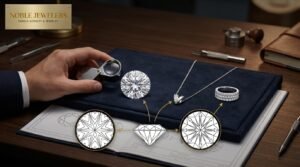
Clarity refers to the number and visibility of inclusions or flaws within a diamond. These are minute, sometimes microscopic, imperfections that cannot be easily seen without magnification: the fewer inclusions, the greater the transparency and the greater the diamond’s value.
The clarity of the diamonds is graded as Flawless (no inclusions can be seen even under 10x magnification) and Included (inclusions can be seen with the naked eye). For engagement rings, aim for diamonds in the VS2 to SI1 range, as these are typically “eye-clean,” meaning no visible flaws without magnification.
-
Carat
Carat refers to a diamond’s weight, and in most cases, the larger the carat, the higher the price. Nevertheless, two diamonds of the same carat weight may appear different due to variations in cut. For example, a larger-diameter, shallower diamond will appear larger, yet it will not exhibit the same brilliance as a well-balanced diamond of the same weight.
The magic sizes of diamonds also affect the carat size. A diamond slightly bigger than a round weight, such as 1.0 carat or 1.5 carat, may be significantly pricier than a diamond a fraction smaller. Remember this in creating your budget.
Step 2: Picking the Shape That Fits Their Style
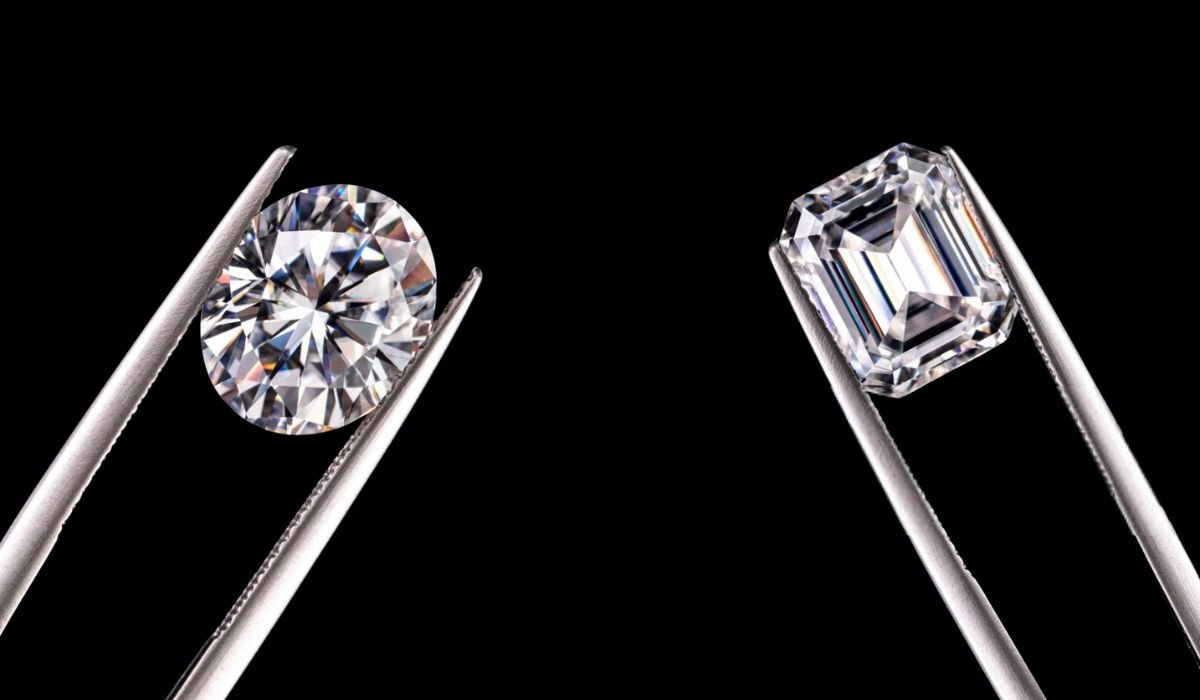
The shape of a diamond is one of the most personal aspects of the decision. It not only reflects the diamond’s physical appearance but also the wearer’s style and personality. Some of the most popular diamond shapes include:
- Round: Classic and super sparkly
- Oval: Soft, elegant, helps fingers look longer
- Princess: Square with firm edges and bright shine
- Emerald: Clean lines, vintage look
- Radiant: Mix of bright sparkle and modern shape
- Pear: Teardrop style that feels graceful
- Cushion: Soft edges and romantic feel
- Marquise: Long shape that looks big on the hand
- Heart: Sweet and symbolic
Also, consider your partner’s style and hand shape when choosing the perfect diamond. For example, an oval or marquise diamond can make fingers look longer, while round and cushion diamonds offer a timeless appeal. If your partner loves vintage styles, an emerald or Asscher cut might be perfect.
Step 4: Setting Your Budget and Priorities
It is essential to have a budget before you start comparing loose diamonds. You should be realistic about what you can afford, but you should also bear in mind that with a bit of planning, you can get a beautiful diamond at a price that you can afford. List the features that are the most important to you:
- Want more sparkle? Invest in a higher-quality cut.
- Want a bigger diamond? You may consider compromising slightly on color or clarity.
- Looking for rarity? Choose diamonds with higher color and clarity.
A great tip from experts is to focus on cutting first, as a well-cut diamond often outshines a larger stone with a poor cut. According to GIA, this approach helps buyers avoid overpaying for rocks that are not well-balanced across the 4 Cs.
Step 5. Choose Between Natural & Lab-Grown Diamonds
Both natural and lab-grown diamonds are real diamonds, but they differ in origin:
- Natural diamonds formed deep in the Earth over billions of years.
- Lab-grown diamonds are produced using advanced technology and cost 40–70% less than natural diamonds.
According to Forbes, lab-grown diamond sales have grown by more than 50% in recent years, driven by their value and beauty. Both types can be certified, beautiful, and long-lasting.
Step 6: Always Check Certifications
Always buy a diamond with a grading report. The most trusted labs are:
- GIA (Gemological Institute of America)
- IGI (International Gemological Institute)
Certification provides proof of a diamond’s quality and helps you compare stones fairly. It also protects your investment, especially when buying loose diamonds worth thousands of dollars. Reputable merchants provide certifications for all their diamonds, ensuring trust and credibility.
Lastly, the loose diamonds are worth it when they balance your budget, sparkle, and beauty. Many jewelers agree that an excellent cut diamond can look brighter than a higher-carat diamond with a poor cut. According to the GIA, cut quality can improve brilliance by more than 30%.
Final Thoughts
Now you understand how to choose a loose diamond for an engagement ring. Begin with the 4 Cs: focus on cut, purchase certified, and select a shape your partner will adore. We provide all the information you need to make a stress-free selection. You can strike the balance between beauty, value, and sparkle, and you will have a diamond that feels eternal, as well as the love that it symbolizes.
Explore our stunning collection of loose diamonds in Aruba! Visit Noble Jewelers to take a look at a wide range of loose diamonds in various shapes, sizes, and colors. Whether you’re creating the perfect engagement ring or making a wise investment, our expert team is here to guide you
.Don’t miss out! Book a virtual appointment or visit our jewelry store in Aruba to find your perfect diamond!