Choosing a gemstone is not just about sparkle. It is about meaning, value, durability, and how the piece fits into your lifestyle. For many buyers, the real question comes down to moissanite vs diamond. Both stones look stunning and work beautifully in engagement rings, earrings, pendants, and fine jewelry. Yet they differ in ways that matter long after the first impression.
This guide breaks it all down. It explains what each gemstone offers, how they compare in real life, and which one makes sense for different buyers. By the end, the choice between moissanite and diamond will feel far less confusing and far more confident.
Understanding Moissanite vs Diamond at a Glance
The moissanite vs diamond debate usually starts with appearance, but it does not end there. Origin, brilliance, durability, cost, and long-term value all play a role. Diamonds form naturally deep within the earth over billions of years. They carry history, rarity, and tradition. Moissanite, on the other hand, began as a lab-created alternative inspired by a naturally occurring mineral first discovered in a meteor crater.
What Is a Diamond?
Original diamonds are natural gemstones made of pure carbon. Extreme heat and pressure transform carbon atoms into one of the hardest materials on Earth.
Key traits of original diamonds:
- Hardness rating of 10 on the Mohs scale.
- Excellent durability for daily wear.
- Timeless appeal with cultural significance.
- Often used in engagement rings and heirloom jewelry.
Jewelers evaluate them using the Four Cs: cut, color, clarity, and carat weight. Clarity, in particular, influences how clean a diamond looks to the naked eye, which is why understanding everything you need to know about diamond clarity helps buyers make more intelligent choices.
What Is Moissanite?
Moissanite is made from silicon carbide. While natural moissanite exists, it is scarce. Nearly all moissanite used in jewelry today is created in controlled laboratory environments.
Defining features of moissanite:
- Hardness rating of 9.25 on the Mohs scale.
- Exceptional brilliance and fire.
- Consistent quality due to lab creation.
- Lower price point compared to diamonds.
Moissanite appeals to buyers who want visual impact without the higher cost. It also attracts those who prefer lab-created stones for ethical or environmental reasons.
Fundamental Differences Between Moissanite and Diamond
Visual differences often drive the buying decision. At first glance, both stones look similar. Under closer inspection, trained eyes notice clear distinctions.
-
Brilliance and Sparkle
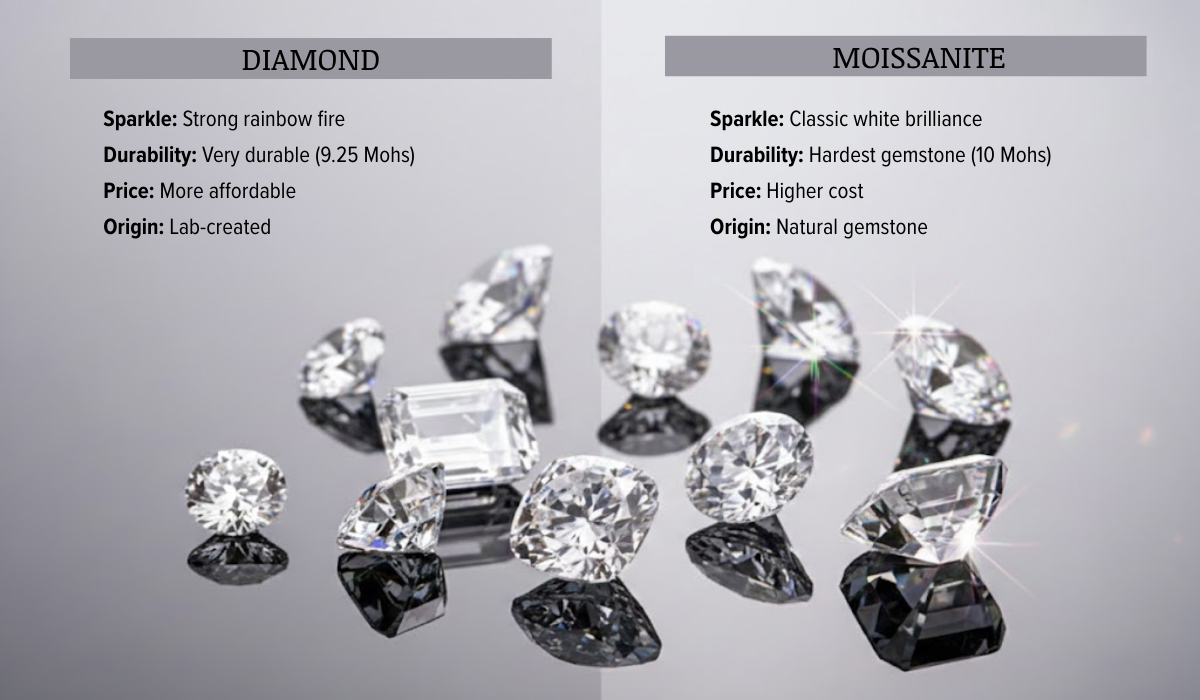
Diamonds produce a more brilliant white light, with a sparkle that appears crisp and balanced. Moissanite, on the other hand, exhibits a stronger fire, creating more vivid rainbow flashes under the light. Some buyers are drawn to the bold sparkle of moissanite, while others prefer the refined glow of diamonds. Neither is inherently better; it all comes down to personal preference.
-
Clarity and Color
Moissanite usually appears near-colorless or colorless. Diamonds range widely in color grades, from icy white to warm tones.
In side-by-side comparisons, moissanite may show slight color flashes, especially in larger stones. Diamonds maintain a more neutral appearance.
-
Durability and Daily Wear
Jewelry should last. Rings, especially engagement rings, face daily wear and tear. Diamonds rank highest in hardness. They resist scratches better than any gemstone.
Moissanite comes in a close second and performs exceptionally well for everyday use. For most wearers, both stones offer enough durability. Proper setting and care matter more than the slight difference in hardness.
-
Cost Comparison
Price is often the deciding factor in moissanite vs diamond comparisons. Diamond prices increase sharply with size and quality. Natural rarity drives long-term value. High-quality diamonds can retain or increase their worth over time.
Moissanite costs significantly less per carat. Buyers can choose larger stones without stretching their budget. However, moissanite does not hold resale value like diamonds.
Choice Based on Lifestyle and Budget
The truth is, the perfect gemstone reflects a person’s lifestyle, values, and how they spend their time. No single stone is right for everyone. The choice for moissanite and diamond comparison states:
Choose a diamond if:
- Long-term value matters; diamonds often retain or increase in worth.
- Tradition feels important; diamonds carry historical and cultural significance.
- Durability is essential; diamonds are the hardest gemstone and handle daily wear effortlessly.
- Emotional connection is a priority; diamonds symbolize timeless commitment and milestones.
Choose moissanite if:
- Budget flexibility matters; moissanite allows larger stones or more elaborate settings at a lower cost.
- Bold sparkle is desired; moissanite produces more fire and rainbow flashes.
- Ethical sourcing is a top priority; lab-created stones avoid mining concerns.
- Modern style and customization appeal; moissanite works beautifully in contemporary designs.
Final Thoughts
The debate over moissanite vs. diamond has no clear winner. It ends with understanding. Diamonds offer rarity, tradition, and lasting value. Moissanite offers brilliance, affordability, and modern appeal. Both stones shine when chosen for the right reasons.
For buyers exploring fine jewelry and trusted jewelry stores in Aruba, Noble Jewelers stands apart. Our collection features expertly crafted engagement rings, earrings, bracelets, pendants, and custom designs. Every piece reflects precision, quality, and deep respect for craftsmanship.
We deliver personalized service, transparent guidance, and a curated selection that meets international standards. Visit Noble Jewelers to experience jewelry that feels intentional, refined, and enduring. Discover a place where expertise meets trust and every gemstone tells a story worth wearing.